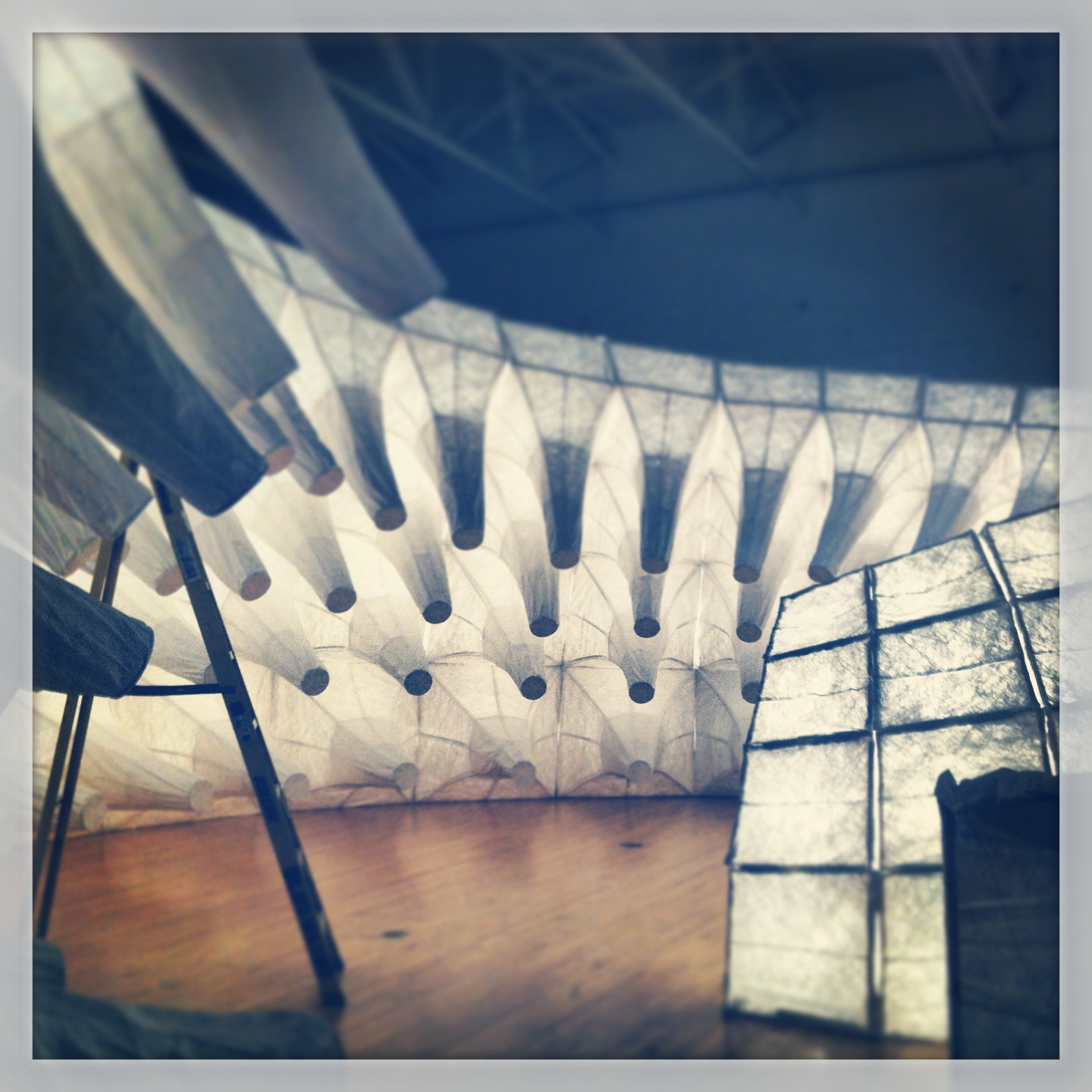
I was given an amazing opportunity at my internship a couple weeks ago. I was able to work with John Grade on his newest piece Capacitor.
Capacitor is based on the single-cell algae, called cocolithophore. Coccolithophores are one-celled marine plants that live in large numbers throughout the upper layers of the ocean. Unlike any other plant in the ocean, coccolithophores surround themselves with a microscopic plating made of limestone (calcite). These scales, known as coccoliths, are shaped like hubcaps and are only three one-thousandths of a millimeter in diameter. So although they are really, really small; they also congregate in HUGE groups. They stay alive for a few weeks and then their white calcium shells float to the bottom of the sea. If you're wondering how many group at once, take a look at this picture:
That is a picture from space. Those milky turquoise parts of the water are the cocolithophore. Those cocolithophores can be seen from space. Think about that for a minute. Nature is awesome.
We started the sculpture with a wooden skeleton type thing. I took pictures most of the days I was there, so you can see how the sculpture takes shape. Each piece of wood is unique, because the sculpture starts smallish and gets gradually larger and curling, like a nautilus shell.
After the bones of the sculpture were put together in their pods of four, we put sleeves made of tyvek (flashspun high-density polyethylene fibers) over the nose of the cone. With in the cone, there is a light bulb and that's where the sculpture starts getting crazy! Outside of the building there are sensors, when the temperature deviates from the norm, the lights get brighter and dimmer. AND when the windspeed deviates from the norm, the sculpture will actually move, blossoming with the abnormal speeds of the wind.
After the cones were given their socks, the sculpture was ready to be put together. I was not actually there for this part of the process, but from what I gathered it was full of problem solving and frustration. Eventually, the sculpture was assembled!
After a lot of work, Capacitor is ready to go! There's an opening tomorrow (Friday) from 5-8, so come and check it out! It's amazing and beautiful.
Also here is a fun shot of me putting one of the cones together!
It was a really great experience working on this installation and John Grade was really nice.