 |
| Jessie Unterhalter & Katey Truhn at Deland Park in Sheboygan |

Showing posts with label JMKAC. Show all posts
Showing posts with label JMKAC. Show all posts
Thursday, July 18, 2013
The Sheboygan Project
Like I mentioned in my last post, the John Michael Kohler Arts Center is always trying to connect the community with art in amazing ways. One of their latest endeavors is The Sheboygan Project. The Sheboygan Project is what came of the John Michael Kohler Arts Center working closely with the Wooster Collective. The Wooster Collective started as a website showcasing different street artists in a variety of different mediums- like cardboard art and guerilla gardening. With the Sheboygan Project, the Wooster Collective and JMKAC are bringing street art to sheboygan with artists Chris Stain, Gabriel Specter, Jessie Unterhalter & Katey Truhn, along a few other artists.

Friday, July 12, 2013
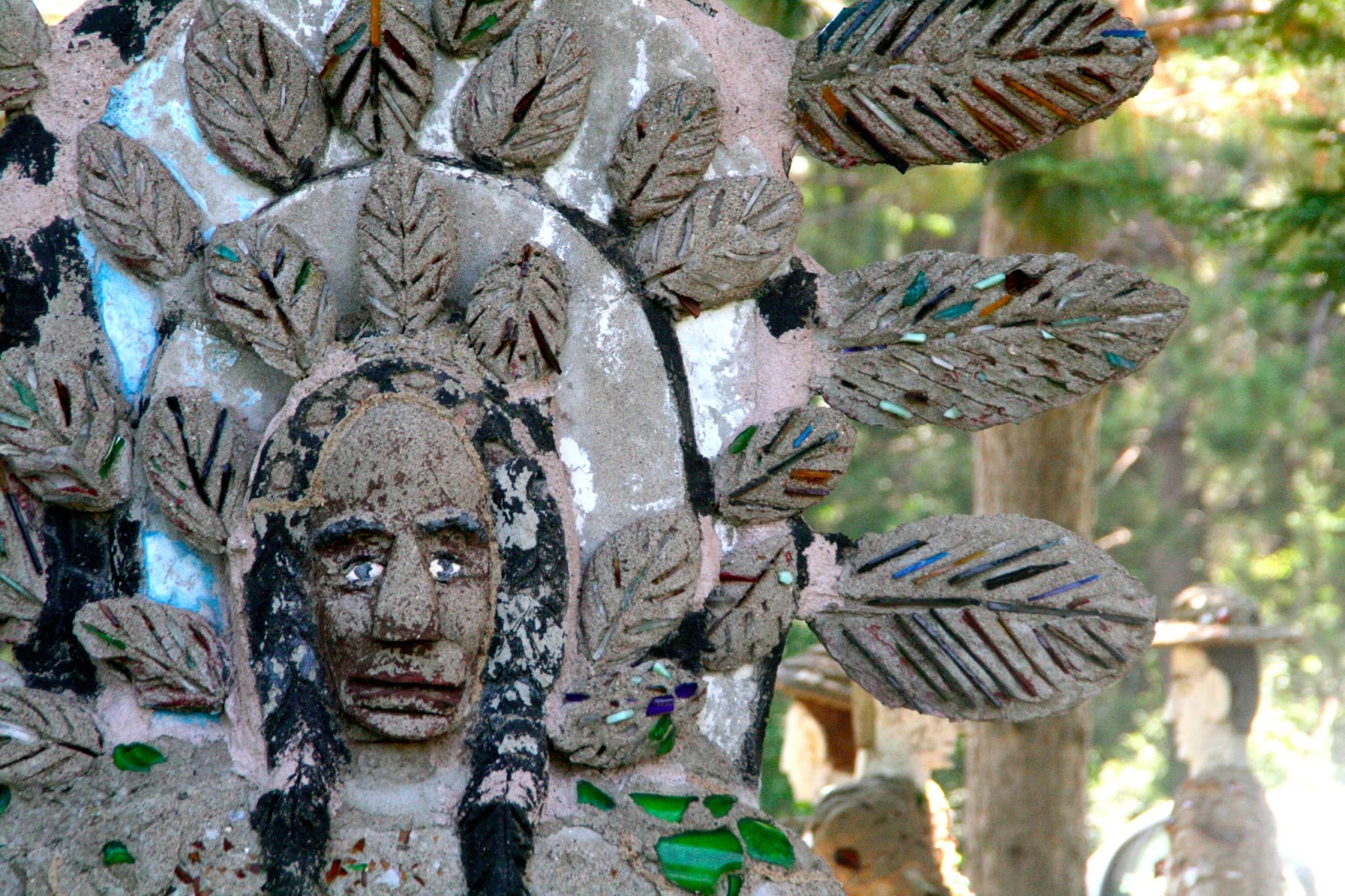
Fred Smith's Concrete Park Workshop
One thing that makes the John Michael Kohler Arts Center such a great place to work with is that they are constantly providing programming that not only serves the community but connects the people in the community with the art they conserve. As an intern on the exhibitions team, I had the opportunity to help out with a workshop at Fred Smith's Concrete Park in Phillips, Wisconsin. It was absolutely amazing and I think it was a massively successful workshop!

Thursday, April 11, 2013
John Grade - Capacitor
_2013_ex.cap.2013.0038+(1).jpg)
I was given an amazing opportunity at my internship a couple weeks ago. I was able to work with John Grade on his newest piece Capacitor.
Capacitor is based on the single-cell algae, called cocolithophore. Coccolithophores are one-celled marine plants that live in large numbers throughout the upper layers of the ocean. Unlike any other plant in the ocean, coccolithophores surround themselves with a microscopic plating made of limestone (calcite). These scales, known as coccoliths, are shaped like hubcaps and are only three one-thousandths of a millimeter in diameter. So although they are really, really small; they also congregate in HUGE groups. They stay alive for a few weeks and then their white calcium shells float to the bottom of the sea. If you're wondering how many group at once, take a look at this picture:

That is a picture from space. Those milky turquoise parts of the water are the cocolithophore. Those cocolithophores can be seen from space. Think about that for a minute. Nature is awesome.
We started the sculpture with a wooden skeleton type thing. I took pictures most of the days I was there, so you can see how the sculpture takes shape. Each piece of wood is unique, because the sculpture starts smallish and gets gradually larger and curling, like a nautilus shell.


After a lot of work, Capacitor is ready to go! There's an opening tomorrow (Friday) from 5-8, so come and check it out! It's amazing and beautiful.
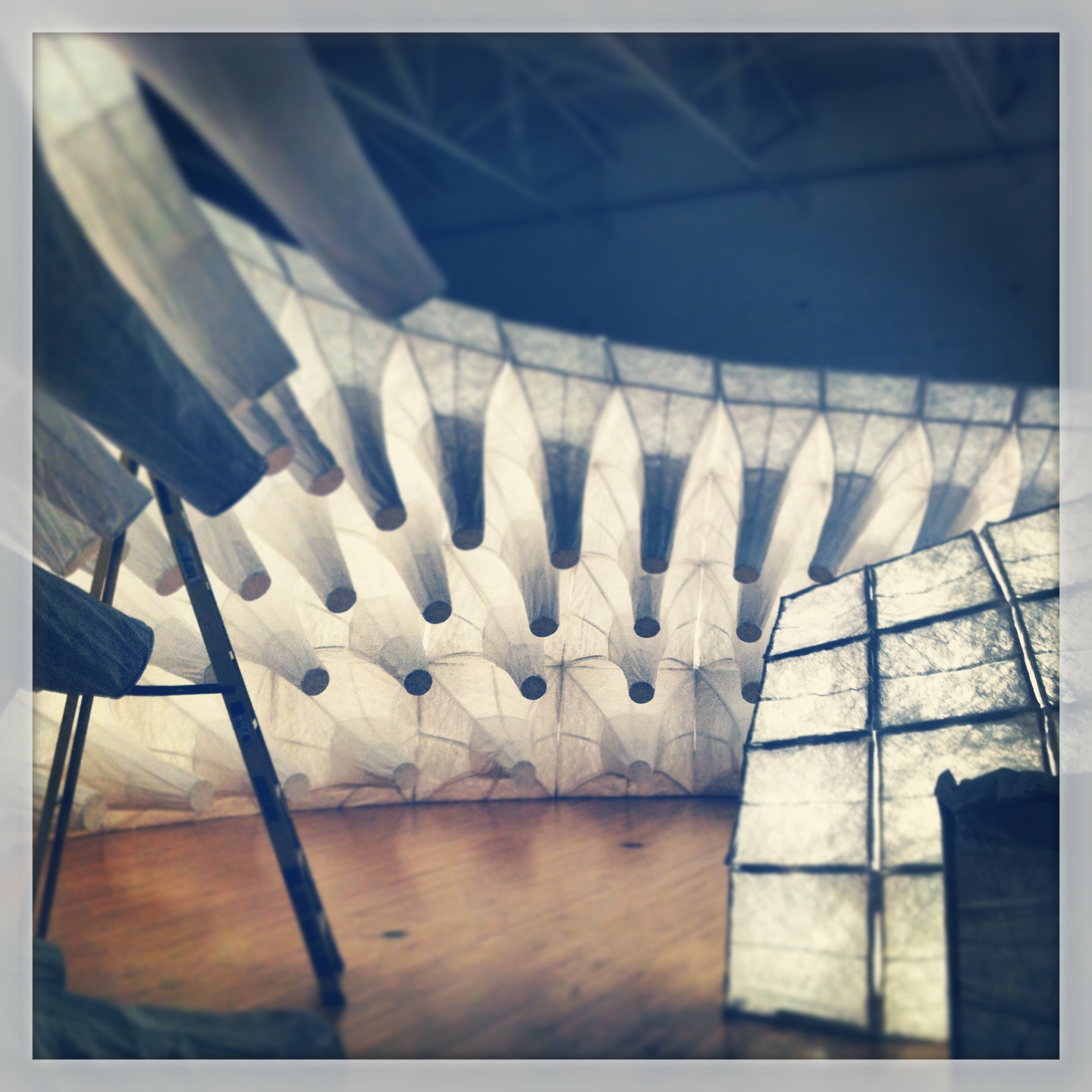
Also here is a fun shot of me putting one of the cones together!

It was a really great experience working on this installation and John Grade was really nice.
Thursday, March 21, 2013
Artist Spotlight - Alison Moritsugu
As I was going through boxes at my internship, I found a gallery handout for Alison Moritsugu and I instantly wanted to do a post on her. This was the installation that had me so enamored:

I nearly exploded with excitement! My friend Sam and I have had several conversations about landscape painting. You can be a great artist and a skilled painter or drawer, but landscapes often run the risk of being repetitive and boring. Alison Mortisugu has totally rocked the landscape here. What makes this landscape so much more than a lighthouse or barn?
The fragmented "canvas" (by the way, doing this on tree cookies? love, love, love) is awesome. This fragmentation of the picture allows the viewer to "fill in the blanks" creating a more visually stimulating experience. I love that the tree branches twist and turn through the piece.
I don't know if you can tell, but the pieces of wood extend out to different lengths, creating more of a space for those who are seeing this in real life.

Doesn't this picture just make you want to walk around the installation, looking at it from every angle? (That's how it makes me feel!)

This picture above is part of her log series, a sort of extension from her landscape series. This is what she has to say about it: “There is also a kitschy tradition of painting on log slices, which I like, I think that these works subvert painting and turn it into something else.” She had previously been painting on wood panels and had been looking for a way to make her paintings more of an object. She saw a wood pile and a lightbulb lit up! Something else that I enjoy about her landscape and her log series is that although they are a beautiful piece of art collectively, they are also small pieces of art individually.


I nearly exploded with excitement! My friend Sam and I have had several conversations about landscape painting. You can be a great artist and a skilled painter or drawer, but landscapes often run the risk of being repetitive and boring. Alison Mortisugu has totally rocked the landscape here. What makes this landscape so much more than a lighthouse or barn?
The fragmented "canvas" (by the way, doing this on tree cookies? love, love, love) is awesome. This fragmentation of the picture allows the viewer to "fill in the blanks" creating a more visually stimulating experience. I love that the tree branches twist and turn through the piece.
I don't know if you can tell, but the pieces of wood extend out to different lengths, creating more of a space for those who are seeing this in real life.

Doesn't this picture just make you want to walk around the installation, looking at it from every angle? (That's how it makes me feel!)

This picture above is part of her log series, a sort of extension from her landscape series. This is what she has to say about it: “There is also a kitschy tradition of painting on log slices, which I like, I think that these works subvert painting and turn it into something else.” She had previously been painting on wood panels and had been looking for a way to make her paintings more of an object. She saw a wood pile and a lightbulb lit up! Something else that I enjoy about her landscape and her log series is that although they are a beautiful piece of art collectively, they are also small pieces of art individually.

Wai Hookahe, 2007
Mixed media, 38" x 46½" x 46½" deep
If you're wondering a little bit about her... Alison Moritsugu was born and raised in Hawaii and left the islands after high school. After graduating from Washington University in St. Louis, Missouri, she earned a Master of Fine Arts from the School of Visual Arts in New York. On return visits to Hawaii, she noticed the drastic changes to the local landscape. She not only has done the fragmented lanscapes but she created amazing wallpaper that features flowers and plants native to Hawaii.

If you look within the design of the wallpaper, you can see the silhouettes of plants and animals. But she employs imagery as social commentary, picturing plant life that has driven out native forms in vivid colors, while the extinct and endangered plants and birds are seen as white contours. Here is a detail of that:
In 1999, she created a piece for the John Michael Kohler Arts Center. I was 9 then and I remember it, but barely. I wish I could see her again, I guess I'll have to keep my eyes peeled for her next show near me!
Wednesday, March 13, 2013
Internship Update - Week 10?
I haven't done an internship update in a while, so I figured I'd get you up to speed on what I've been up to!
Things have really picked up for me as an intern. I'm helping out with the Arts/Industry program now, so I'm transcribing interviews with artists in residence. There have been nearly 400 artists, so I have my work cut out for me! It's been really awesome listening to what the artists have gleaned from the program and how things they did in the residency made an impact on the rest of the career. One of the artists talked about how before she worked in the factory, she almost always worked on the pottery wheel exclusively and that the factory really opened her eyes to mold making and expanded her knowledge base in pottery. It's really fascinating hearing so many points of view on the same program. It's all in the same place with relatively the same structure, yet every artist has a completely unique experience. Those experiences really come out in the interviews and I like being able to share in those memories.
Another thing I've been doing is helping install exhibitions. The first exhibition install that I observed was Kate McDowell. She created these toads during her residency with Arts/Industry and the install process was pretty intense. The toads were really fragile and had to be attached so that no one could just pick one up and walk off with it. It was a really interesting process to watch.
With Lauren Fensterstock's exhibit, I was able to take a more active role and help with placing grass as part of her installation Celebration of Formal Effects, Whether Natural or Artificial. It was a really amazing experience to be able to work closely with an established artist. I'm also preparing for my senior seminar gallery show with my peers, so it's been an eyeopening experience to witness what happens in the gallery during an install of an exhibit.
John Michael Kohler Arts Center is in the process of installing a series of new exhibitions under the name Uncommon Ground, which has a lot to do with ecological art. If you've been following the blog at all, you know that's my thing! One of the exhibits in this theme is John Grade's Capacitor, which is such an amazing idea, I'm going to save it for it's very own post. I've been helping install that and it's been a crazy, complicated process but it's definitely going to be worth it!
Here's a sneak peek of what we're dealing with. I've been posting stuff on my instagram page pretty often so if you want to check it out, my name is _jenny_bee_.
Other than helping install and transcribing interviews, I've been doing research on objects in folk art like memory jugs and smoking stands.
I've been pretty busy here, but it's so great. I'm learning a lot and having fun!
Things have really picked up for me as an intern. I'm helping out with the Arts/Industry program now, so I'm transcribing interviews with artists in residence. There have been nearly 400 artists, so I have my work cut out for me! It's been really awesome listening to what the artists have gleaned from the program and how things they did in the residency made an impact on the rest of the career. One of the artists talked about how before she worked in the factory, she almost always worked on the pottery wheel exclusively and that the factory really opened her eyes to mold making and expanded her knowledge base in pottery. It's really fascinating hearing so many points of view on the same program. It's all in the same place with relatively the same structure, yet every artist has a completely unique experience. Those experiences really come out in the interviews and I like being able to share in those memories.
Another thing I've been doing is helping install exhibitions. The first exhibition install that I observed was Kate McDowell. She created these toads during her residency with Arts/Industry and the install process was pretty intense. The toads were really fragile and had to be attached so that no one could just pick one up and walk off with it. It was a really interesting process to watch.
_2012_2012_019_0001_v0017.jpg) |
| Photo courtesy of John Michael Kohler Arts Center, Sheboygan. Artist: Kate MacDowell |
With Lauren Fensterstock's exhibit, I was able to take a more active role and help with placing grass as part of her installation Celebration of Formal Effects, Whether Natural or Artificial. It was a really amazing experience to be able to work closely with an established artist. I'm also preparing for my senior seminar gallery show with my peers, so it's been an eyeopening experience to witness what happens in the gallery during an install of an exhibit.
John Michael Kohler Arts Center is in the process of installing a series of new exhibitions under the name Uncommon Ground, which has a lot to do with ecological art. If you've been following the blog at all, you know that's my thing! One of the exhibits in this theme is John Grade's Capacitor, which is such an amazing idea, I'm going to save it for it's very own post. I've been helping install that and it's been a crazy, complicated process but it's definitely going to be worth it!
Here's a sneak peek of what we're dealing with. I've been posting stuff on my instagram page pretty often so if you want to check it out, my name is _jenny_bee_.
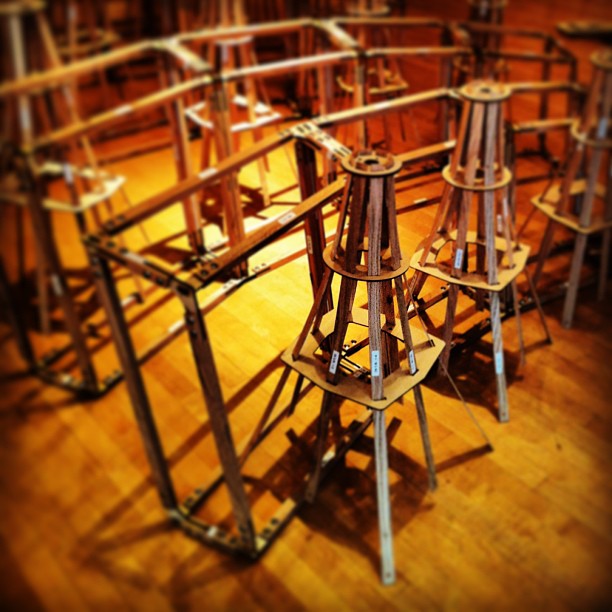 |
| What's John Grade got going on? Guess you'll have to wait and see! |
Other than helping install and transcribing interviews, I've been doing research on objects in folk art like memory jugs and smoking stands.
I've been pretty busy here, but it's so great. I'm learning a lot and having fun!
Monday, March 11, 2013
Artist Spotlight - Lauren Fensterstock
At my internship, I get a unique (and totally awesome) opportunity assisting artists with their installations. Lauren Fensterstock is one of those artists! I was even able to ask her a couple questions while we were working. Before I get to those, I'll give you a little peek at what she's done in other institutions.


.JPG)


Yes, that's paper.
Yes, it's hand-curled and formed.
Yes, it's amazing.

For the John Michael Kohler Arts Center, Lauren Fensterstock did her largest installation ever! It's called "Celebration of Formal Effects, Whether Natural or Artificial" and in it, she's created three separate gardens using ornately quilled, cut, and sculpted black paper. As beautiful as those pictures above are, it's nothing like being there in person, especially when I feel like I've been stuck inside for ages because of the Wisconsin winter.
Fensterstock has been inspired by victorian art practices (like quilling) and more importantly, nature. She gardens at her home in Maine, and through her garden discovered a connections between natural and fabricated in her garden. She set out to create a "wild, overgrown" garden. When done, her garden looked "natural" yet did not have any plants that were native to Maine.
In her art, this natural-yet-not look is also employed. The ribbons of paper look like they fit right in with the curling petals and quilled leaves.
I was only able to get a couple pictures of the one at JMKAC, so here's one of those...
.JPG)
Here's a picture from the arts center for a less instagrammy view of the exhibition currently on view.
 |
| jmkac.org |
It's on view through August 18th at JMKAC, so check it out!
Tuesday, January 29, 2013
Artist Spotlight - Levi Fisher Ames
I love small things. I love things displayed in boxes.
As a result, I love Levi Fisher Ames' menagerie of carved animals.

Although he was a carpenter before the war, he honed his whittling skills while hospitalized and continued to work as a carpenter and artist after the war.
This is where things get interesting, in my opinion.
So Levi Fisher Ames carves and carves and has all these creatures and makes all these boxes for them and then makes bigger boxes for the little boxes and then he travels around Barnum and Bailey style and calls it a museum and charges 10 cents for people to look at it... and it worked! People paid!
Something that I think is pretty remarkable is that the pieces within have never been separated. Ames felt that it was a set and refused to sell off creatures from it. Eventually, Ames died and his sons inherited the menagerie. During the Depression, they sold the whole thing to a pawn shop. However, they were able to get the whole museum back intact a few years later. Now John Michael Kohler Arts Center is taking care of the zoo and it will surely not be separated then.
Here's a book, if you wish to learn more!
http://www.jmkacstore.org/levifisheramesmenagerie.aspx
Artist Spotlight: Mary Nohl
The Fox Point Witch!
Just down the road from my university, down a curving hill and past the blue waters of Lake Michigan lies the Mary Nohl Art Environment. (Also known as The Fox Point Witch's House and the Mary Nohl House)

Born in 1914, Mary Nohl graduated from the Art Institute of Chicago and taught in junior high schools around the area and eventually opened her own ceramics studio for 10 years.
After her parents died, Mary Nohl received an inheritance which allowed her to create a massive collection of folk art, including statues and architectural features. After Mary Nohl's death, the Kohler foundation acquired the property and began cataloging the hundreds of pieces that she had made from 1961-2001, the year of her death. Although she donated many of her pieces to the John Michael Kohler Arts Center when she was alive, they've also acquired her house after her death and are working hard to preserve and conserve it (as well as make it available to the public - fingers crossed!)
The whimsy of the home jumps out at you when you drive by. The house has bright, wooden reliefs of blue, turquoise and red. The house is surrounded by concrete sculptures with different natural elements mixed in- like driftwood, rocks from the beach and glass. She drew much of her inspiration from the lake right outside her house. One of the things I admire about Mary Nohl is her perspective that everything could be a medium. She transformed everything from her lawn to the inside of her house; making it go from drab to expressive. The house is a private residence and the other people in the neighborhood don't really like having people hanging out and looking at the house. That's why it isn't open to the public, unfortunately.
Although she is most known for her concrete sculptures outside fo her home, she also worked with...
Wood
She carved faces out of wood and made them into a playful fence. She eventually hung the wooden faces from the trees surrounding her yard, because vandals were stealing them.

Metal
She created jewelry! Often depicting people in boats, likely inspired by her home on the lake. You can actually still buy her designs at the John Michael Kohler Arts Center store page.

Just down the road from my university, down a curving hill and past the blue waters of Lake Michigan lies the Mary Nohl Art Environment. (Also known as The Fox Point Witch's House and the Mary Nohl House)

Born in 1914, Mary Nohl graduated from the Art Institute of Chicago and taught in junior high schools around the area and eventually opened her own ceramics studio for 10 years.
After her parents died, Mary Nohl received an inheritance which allowed her to create a massive collection of folk art, including statues and architectural features. After Mary Nohl's death, the Kohler foundation acquired the property and began cataloging the hundreds of pieces that she had made from 1961-2001, the year of her death. Although she donated many of her pieces to the John Michael Kohler Arts Center when she was alive, they've also acquired her house after her death and are working hard to preserve and conserve it (as well as make it available to the public - fingers crossed!)
The whimsy of the home jumps out at you when you drive by. The house has bright, wooden reliefs of blue, turquoise and red. The house is surrounded by concrete sculptures with different natural elements mixed in- like driftwood, rocks from the beach and glass. She drew much of her inspiration from the lake right outside her house. One of the things I admire about Mary Nohl is her perspective that everything could be a medium. She transformed everything from her lawn to the inside of her house; making it go from drab to expressive. The house is a private residence and the other people in the neighborhood don't really like having people hanging out and looking at the house. That's why it isn't open to the public, unfortunately.
Although she is most known for her concrete sculptures outside fo her home, she also worked with...
Wood
She carved faces out of wood and made them into a playful fence. She eventually hung the wooden faces from the trees surrounding her yard, because vandals were stealing them.

Metal
She created jewelry! Often depicting people in boats, likely inspired by her home on the lake. You can actually still buy her designs at the John Michael Kohler Arts Center store page.

Woodcut & Printing
In the book Mary Nohl: Inside and Out, there are many pictures of her woodcuts. I was unable to find any pictures online, unfortunately. They are of people and rooms and streets, likely to be Maryland; where she was an art teacher at the time. If you look at Van Gogh's bedroom painting, they look a little like that. With wiggly, expressive lines and energy bouncing from the images.
Ceramic
After she traveled and taught, she became a potter and opened her own studio and sold her own designs. You can see the clear beginnings of her whimsical style that would later define her concrete works: curious faces and expressive bodies.
 |
| This is an intern for the Kohler Foundation making an inventory of some of the ceramic items in Mary's home after her death. |
Mary Nohl also painted, drew and experimented with all sorts of mediums in between. She truly is an inspiration to artists who want to try everything. There is much more that I can say about Mary, but instead I will end with a quote from her:
"No amount of disorder will induce me to give up my front row seat on the changing moods of Lake Michigan- the ice hills against the blue water in the winter, and the afterglow of the sunsets in the summer, and the infinite variety in between."
Friday, January 18, 2013
Internship Update - Week 2
My internship is two days a week (Mondays and Wednesdays). On Mondays we are in the warehouse and on Wednesday we're at the arts center getting down to business.
This past Monday was my first day at the warehouse and now that I've done it for a whole day I think I can be better prepared for this next monday. What we're doing there is assigning each item an accession number, so that everything is cataloged and can be easily found and put in the right place. With the Ray Yoshida collection, everything is organized in tableaus, which is how Ray had his house set up. He would go to the Maxwell St. Market in Chicago and buy often overlooked items and give them new life in his house. He had a massive collection and would rotate his items, to keep his walls looking interesting.
 |
| Those pictures to the left and right are good examples of Ray Yoshida's tableaus. This picture is from an exhibit of Ray Yoshida and his influences. |
I bet you're all saying "What was IN the tableaus, Jenny? I WANT TO KNOW!" Well, there are masks and ships and furniture and little ceramics people and a little under life-size baby statue and about a million other things that range from silent butlers to a set of wrenches.
One of the most interesting things I came across while checking the first tableaus was some 2-D work given to Ray by Jim Nutt, another Chicago Imagist. On the back, Jim had written notes to Ray. I love that part of art. So many times you'll only see one side of the picture and in this case it's literal. On the back side, there is a real person. Also, Jim Nutt seems hilarious to me. I can't exactly remember what it said, but it was something like "This is for Ray, because he had it cumming to him" and then there was a little picture of a splat.
 |
| Ice cream manwich, perhaps? This is an example of a Jim Nutt piece. |
On Wednesday, I worked on doing a little research on starting a museum blog. Starting this blog was fairly simple, but starting a blog for an institution is turning out to be quite a process. and, as with most things with museums, just because it seems like a good idea doesn't mean it's going anywhere fast. There's so much to consider when introducing social media to a business. What should you post, what shouldn't you post and with museums you also have to consider copyrights. I'm interested to see if the blog gets up and going or not. I like doing the research for the potential posts though!
Next weekend, I'm going down to Chicago and hopefully will be visiting the Roger Brown Memorial Collection (another friend of Ray Yoshida) and I'll definitely be visiting Intuit, the museum where they have a replica of Henry Darger's apartment. I'm so excited!
I'm planning a few posts this week, one about Mary Nohl and maybe one about John Grade; so be sure to check back!
Monday, December 3, 2012
Tracing Perspectives... What's it about?
Welcome to Tracing Perspectives!
Tracing Perspectives is an extension of my History and Conservation of Folk Art study. It's my last semester at Cardinal Stritch University and I designed this independent study so I could carve out time to pursue one of my passions - art history!
In the past few years I've become really interested in folk art. Lucky for me, I've been able to visit a few folk art sites around Wisconsin. If you're interested in looking at a few of them, you can check out the Wandering Wisconsin website.
I'll be working on this project with the John Michael Kohler Arts Center, a not-for-profit art museum in Sheboygan, Wisconsin. I'll be collaborating with curation and exhibitions as well, learning about how an exhibit gets from research to gallery. I hope to be featuring pieces of art on here (if the copyright allows) and telling about my exploration into art history and research.
So, why "Tracing Perspectives?" I'll be looking at the world through others' eyes, through their art, through the manifestation of their perspectives and tracing their views in hopes of obtaining a deeper understanding of their art and art in general.
This is a picture from Fred Smith's Concrete Park, He's a Wisconsin folk artist who made larger-than-life art out of concrete and glass. He even made the Anheuser-Busch Clydesdales team! I'll be dedicating a whole post to him, so stay tuned!
Thanks for reading!
Jenny
Tracing Perspectives is an extension of my History and Conservation of Folk Art study. It's my last semester at Cardinal Stritch University and I designed this independent study so I could carve out time to pursue one of my passions - art history!
In the past few years I've become really interested in folk art. Lucky for me, I've been able to visit a few folk art sites around Wisconsin. If you're interested in looking at a few of them, you can check out the Wandering Wisconsin website.
I'll be working on this project with the John Michael Kohler Arts Center, a not-for-profit art museum in Sheboygan, Wisconsin. I'll be collaborating with curation and exhibitions as well, learning about how an exhibit gets from research to gallery. I hope to be featuring pieces of art on here (if the copyright allows) and telling about my exploration into art history and research.
So, why "Tracing Perspectives?" I'll be looking at the world through others' eyes, through their art, through the manifestation of their perspectives and tracing their views in hopes of obtaining a deeper understanding of their art and art in general.
 |
Thanks for reading!
Jenny
Subscribe to:
Posts (Atom)