
Showing posts with label Wisconsin. Show all posts
Showing posts with label Wisconsin. Show all posts
Friday, July 12, 2013
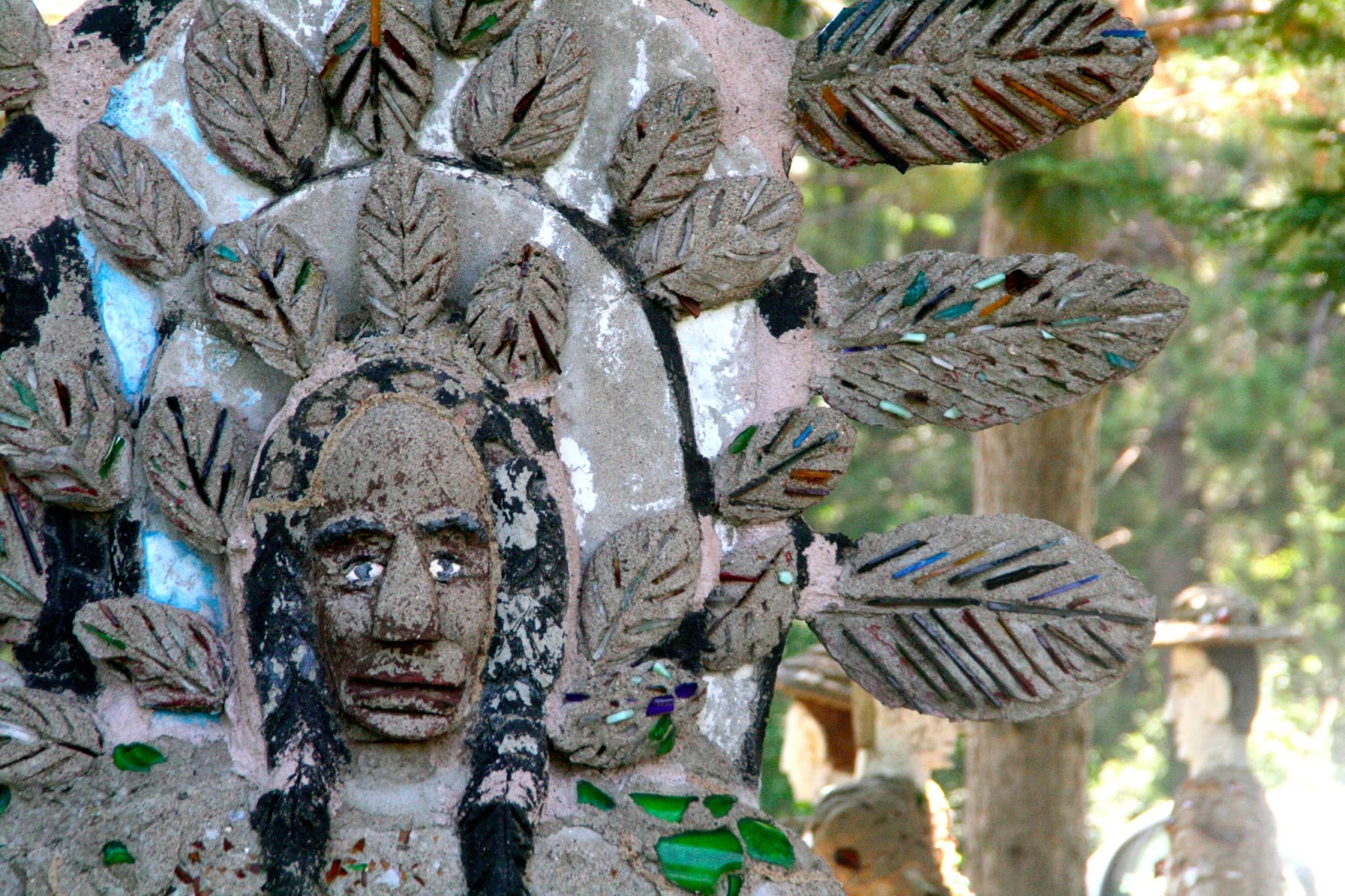
Fred Smith's Concrete Park Workshop
One thing that makes the John Michael Kohler Arts Center such a great place to work with is that they are constantly providing programming that not only serves the community but connects the people in the community with the art they conserve. As an intern on the exhibitions team, I had the opportunity to help out with a workshop at Fred Smith's Concrete Park in Phillips, Wisconsin. It was absolutely amazing and I think it was a massively successful workshop!


Wednesday, March 13, 2013
Internship Update - Week 10?
I haven't done an internship update in a while, so I figured I'd get you up to speed on what I've been up to!
Things have really picked up for me as an intern. I'm helping out with the Arts/Industry program now, so I'm transcribing interviews with artists in residence. There have been nearly 400 artists, so I have my work cut out for me! It's been really awesome listening to what the artists have gleaned from the program and how things they did in the residency made an impact on the rest of the career. One of the artists talked about how before she worked in the factory, she almost always worked on the pottery wheel exclusively and that the factory really opened her eyes to mold making and expanded her knowledge base in pottery. It's really fascinating hearing so many points of view on the same program. It's all in the same place with relatively the same structure, yet every artist has a completely unique experience. Those experiences really come out in the interviews and I like being able to share in those memories.
Another thing I've been doing is helping install exhibitions. The first exhibition install that I observed was Kate McDowell. She created these toads during her residency with Arts/Industry and the install process was pretty intense. The toads were really fragile and had to be attached so that no one could just pick one up and walk off with it. It was a really interesting process to watch.
With Lauren Fensterstock's exhibit, I was able to take a more active role and help with placing grass as part of her installation Celebration of Formal Effects, Whether Natural or Artificial. It was a really amazing experience to be able to work closely with an established artist. I'm also preparing for my senior seminar gallery show with my peers, so it's been an eyeopening experience to witness what happens in the gallery during an install of an exhibit.
John Michael Kohler Arts Center is in the process of installing a series of new exhibitions under the name Uncommon Ground, which has a lot to do with ecological art. If you've been following the blog at all, you know that's my thing! One of the exhibits in this theme is John Grade's Capacitor, which is such an amazing idea, I'm going to save it for it's very own post. I've been helping install that and it's been a crazy, complicated process but it's definitely going to be worth it!
Here's a sneak peek of what we're dealing with. I've been posting stuff on my instagram page pretty often so if you want to check it out, my name is _jenny_bee_.
Other than helping install and transcribing interviews, I've been doing research on objects in folk art like memory jugs and smoking stands.
I've been pretty busy here, but it's so great. I'm learning a lot and having fun!
Things have really picked up for me as an intern. I'm helping out with the Arts/Industry program now, so I'm transcribing interviews with artists in residence. There have been nearly 400 artists, so I have my work cut out for me! It's been really awesome listening to what the artists have gleaned from the program and how things they did in the residency made an impact on the rest of the career. One of the artists talked about how before she worked in the factory, she almost always worked on the pottery wheel exclusively and that the factory really opened her eyes to mold making and expanded her knowledge base in pottery. It's really fascinating hearing so many points of view on the same program. It's all in the same place with relatively the same structure, yet every artist has a completely unique experience. Those experiences really come out in the interviews and I like being able to share in those memories.
Another thing I've been doing is helping install exhibitions. The first exhibition install that I observed was Kate McDowell. She created these toads during her residency with Arts/Industry and the install process was pretty intense. The toads were really fragile and had to be attached so that no one could just pick one up and walk off with it. It was a really interesting process to watch.
_2012_2012_019_0001_v0017.jpg) |
| Photo courtesy of John Michael Kohler Arts Center, Sheboygan. Artist: Kate MacDowell |
With Lauren Fensterstock's exhibit, I was able to take a more active role and help with placing grass as part of her installation Celebration of Formal Effects, Whether Natural or Artificial. It was a really amazing experience to be able to work closely with an established artist. I'm also preparing for my senior seminar gallery show with my peers, so it's been an eyeopening experience to witness what happens in the gallery during an install of an exhibit.
John Michael Kohler Arts Center is in the process of installing a series of new exhibitions under the name Uncommon Ground, which has a lot to do with ecological art. If you've been following the blog at all, you know that's my thing! One of the exhibits in this theme is John Grade's Capacitor, which is such an amazing idea, I'm going to save it for it's very own post. I've been helping install that and it's been a crazy, complicated process but it's definitely going to be worth it!
Here's a sneak peek of what we're dealing with. I've been posting stuff on my instagram page pretty often so if you want to check it out, my name is _jenny_bee_.
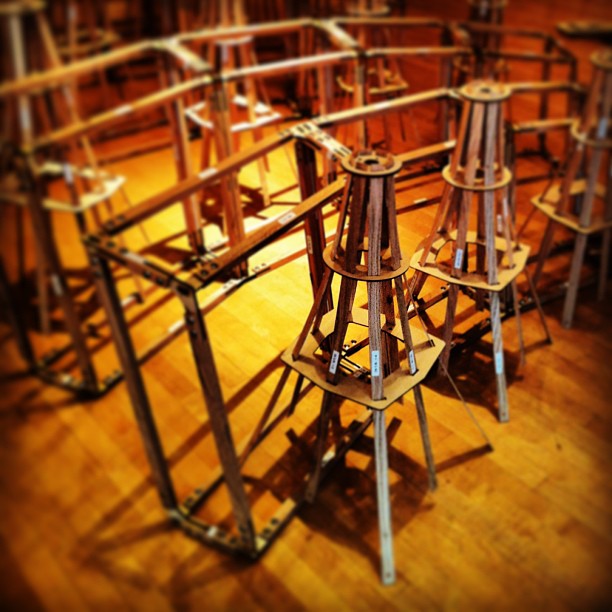 |
| What's John Grade got going on? Guess you'll have to wait and see! |
Other than helping install and transcribing interviews, I've been doing research on objects in folk art like memory jugs and smoking stands.
I've been pretty busy here, but it's so great. I'm learning a lot and having fun!
Friday, February 15, 2013
Museum of Wisconsin Art - West Bend
When my aunt and uncle suggested I come with them to meet the director of the West Bend art museum and a tour of their new building, I agreed, but admittedly wasn't expecting much.


.JPG)
.JPG)
.JPG)
I was pleasantly surprised by a great museum, with a rich collection of Wisconsin art and a gorgeous new building by Jim Shields, who also designed the Discovery Center in downtown Milwaukee, along the lake.
I was also able to sneak some pictures!

These are blown glass sculptures made by Doug and Renee Sigwarth from Sigwarth Glass. They're a husband and wife team and they work out of River Falls, Wisconsin. It took them about a year to complete these sculptures. If you're interested in the making of these massive sculptures, there's an album of pictures on the MWA facebook. Here's one of the pictures, if you're so inclined:

I love seeing behind the scenes shots like these! It's always fun to see how they put these giant sculptures together. It looks like it took a pretty long time. It kind of makes my arms hurt just looking at it.
Below is a shot of a few paintings that are being prepared to hang.
.JPG)
They're still moving everything in, so I got a once in a lifetime chance to witness a museum moving. As you can see, the artworks are all wrapped individually and then safely stacked. Luckily, the new Museum of Wisconsin Art is only about 3 miles from the old one, so they didn't have to travel far.
.JPG)
The picture below is a bunch of Richard Lorenz paintings. He was a fairly prominent wisconsin artist. I haven't had too much of a chance to research him, but from what I got to see; he does beautiful landscapes and some portraits too.
.JPG)
Hope you enjoyed these quick snapshots! The new museum officially opens in April!
Tuesday, January 29, 2013
Artist Spotlight - Levi Fisher Ames
I love small things. I love things displayed in boxes.
As a result, I love Levi Fisher Ames' menagerie of carved animals.

Although he was a carpenter before the war, he honed his whittling skills while hospitalized and continued to work as a carpenter and artist after the war.
This is where things get interesting, in my opinion.
So Levi Fisher Ames carves and carves and has all these creatures and makes all these boxes for them and then makes bigger boxes for the little boxes and then he travels around Barnum and Bailey style and calls it a museum and charges 10 cents for people to look at it... and it worked! People paid!
Something that I think is pretty remarkable is that the pieces within have never been separated. Ames felt that it was a set and refused to sell off creatures from it. Eventually, Ames died and his sons inherited the menagerie. During the Depression, they sold the whole thing to a pawn shop. However, they were able to get the whole museum back intact a few years later. Now John Michael Kohler Arts Center is taking care of the zoo and it will surely not be separated then.
Here's a book, if you wish to learn more!
http://www.jmkacstore.org/levifisheramesmenagerie.aspx
Artist Spotlight: Mary Nohl
The Fox Point Witch!
Just down the road from my university, down a curving hill and past the blue waters of Lake Michigan lies the Mary Nohl Art Environment. (Also known as The Fox Point Witch's House and the Mary Nohl House)

Born in 1914, Mary Nohl graduated from the Art Institute of Chicago and taught in junior high schools around the area and eventually opened her own ceramics studio for 10 years.
After her parents died, Mary Nohl received an inheritance which allowed her to create a massive collection of folk art, including statues and architectural features. After Mary Nohl's death, the Kohler foundation acquired the property and began cataloging the hundreds of pieces that she had made from 1961-2001, the year of her death. Although she donated many of her pieces to the John Michael Kohler Arts Center when she was alive, they've also acquired her house after her death and are working hard to preserve and conserve it (as well as make it available to the public - fingers crossed!)
The whimsy of the home jumps out at you when you drive by. The house has bright, wooden reliefs of blue, turquoise and red. The house is surrounded by concrete sculptures with different natural elements mixed in- like driftwood, rocks from the beach and glass. She drew much of her inspiration from the lake right outside her house. One of the things I admire about Mary Nohl is her perspective that everything could be a medium. She transformed everything from her lawn to the inside of her house; making it go from drab to expressive. The house is a private residence and the other people in the neighborhood don't really like having people hanging out and looking at the house. That's why it isn't open to the public, unfortunately.
Although she is most known for her concrete sculptures outside fo her home, she also worked with...
Wood
She carved faces out of wood and made them into a playful fence. She eventually hung the wooden faces from the trees surrounding her yard, because vandals were stealing them.

Metal
She created jewelry! Often depicting people in boats, likely inspired by her home on the lake. You can actually still buy her designs at the John Michael Kohler Arts Center store page.

Just down the road from my university, down a curving hill and past the blue waters of Lake Michigan lies the Mary Nohl Art Environment. (Also known as The Fox Point Witch's House and the Mary Nohl House)

Born in 1914, Mary Nohl graduated from the Art Institute of Chicago and taught in junior high schools around the area and eventually opened her own ceramics studio for 10 years.
After her parents died, Mary Nohl received an inheritance which allowed her to create a massive collection of folk art, including statues and architectural features. After Mary Nohl's death, the Kohler foundation acquired the property and began cataloging the hundreds of pieces that she had made from 1961-2001, the year of her death. Although she donated many of her pieces to the John Michael Kohler Arts Center when she was alive, they've also acquired her house after her death and are working hard to preserve and conserve it (as well as make it available to the public - fingers crossed!)
The whimsy of the home jumps out at you when you drive by. The house has bright, wooden reliefs of blue, turquoise and red. The house is surrounded by concrete sculptures with different natural elements mixed in- like driftwood, rocks from the beach and glass. She drew much of her inspiration from the lake right outside her house. One of the things I admire about Mary Nohl is her perspective that everything could be a medium. She transformed everything from her lawn to the inside of her house; making it go from drab to expressive. The house is a private residence and the other people in the neighborhood don't really like having people hanging out and looking at the house. That's why it isn't open to the public, unfortunately.
Although she is most known for her concrete sculptures outside fo her home, she also worked with...
Wood
She carved faces out of wood and made them into a playful fence. She eventually hung the wooden faces from the trees surrounding her yard, because vandals were stealing them.

Metal
She created jewelry! Often depicting people in boats, likely inspired by her home on the lake. You can actually still buy her designs at the John Michael Kohler Arts Center store page.

Woodcut & Printing
In the book Mary Nohl: Inside and Out, there are many pictures of her woodcuts. I was unable to find any pictures online, unfortunately. They are of people and rooms and streets, likely to be Maryland; where she was an art teacher at the time. If you look at Van Gogh's bedroom painting, they look a little like that. With wiggly, expressive lines and energy bouncing from the images.
Ceramic
After she traveled and taught, she became a potter and opened her own studio and sold her own designs. You can see the clear beginnings of her whimsical style that would later define her concrete works: curious faces and expressive bodies.
 |
| This is an intern for the Kohler Foundation making an inventory of some of the ceramic items in Mary's home after her death. |
Mary Nohl also painted, drew and experimented with all sorts of mediums in between. She truly is an inspiration to artists who want to try everything. There is much more that I can say about Mary, but instead I will end with a quote from her:
"No amount of disorder will induce me to give up my front row seat on the changing moods of Lake Michigan- the ice hills against the blue water in the winter, and the afterglow of the sunsets in the summer, and the infinite variety in between."
Subscribe to:
Posts (Atom)